Dentures & Partials in Fredericksburg, VA
Complete dentures, partials and implant-secured options, planned and fitted at our Spotsylvania Ave office.
or call (540) 891-9911
Complete, Partial, and Timing Matters
A complete denture is a full set of replacement teeth for the top, the bottom or both. With no natural teeth left to hold it, it stays in by fitting closely against your gums. A partial denture works differently. It fills the spaces between teeth you still have and hooks onto them with small clasps or attachments.
If teeth need to come out first, you have two paths. A conventional denture waits until the gums heal. The final mold then matches tissue that has stopped changing, but you go without teeth in that arch meanwhile. An immediate denture goes in on extraction day, then often needs a reline once the swollen gums shrink back. Your doctor will help you choose.
Who It’s For: Missing Teeth, or a Denture That No Longer Fits
A denture is often the right fit when you have lost several teeth in a row, most of an arch or every tooth. Decay, gum disease, an injury and years of wear are the usual causes.
A denture that slips, clicks when you talk or limits what you can chew is worth having checked. After teeth are gone, the jawbone often shrinks, because bone keeps its size partly through the pressure of tooth roots. A denture holds one fixed shape on a ridge that keeps changing, so a good fit years ago can stop working today.
If a denture never feels secure, implants may be able to steady it. Small posts set in the jawbone give the denture fixed points to attach to, so it stops sliding when you chew. We place and restore implants in this office, and a 3D X-ray (CBCT) shows how much bone is there to work with.
What to Expect, from First Impression to Final Fitting
- Consultation & exam. The doctor looks at your gums, the bone beneath them and any teeth you still have, and takes X-rays. Then you sit down together and compare a complete denture with a partial, and an immediate one with a conventional one.
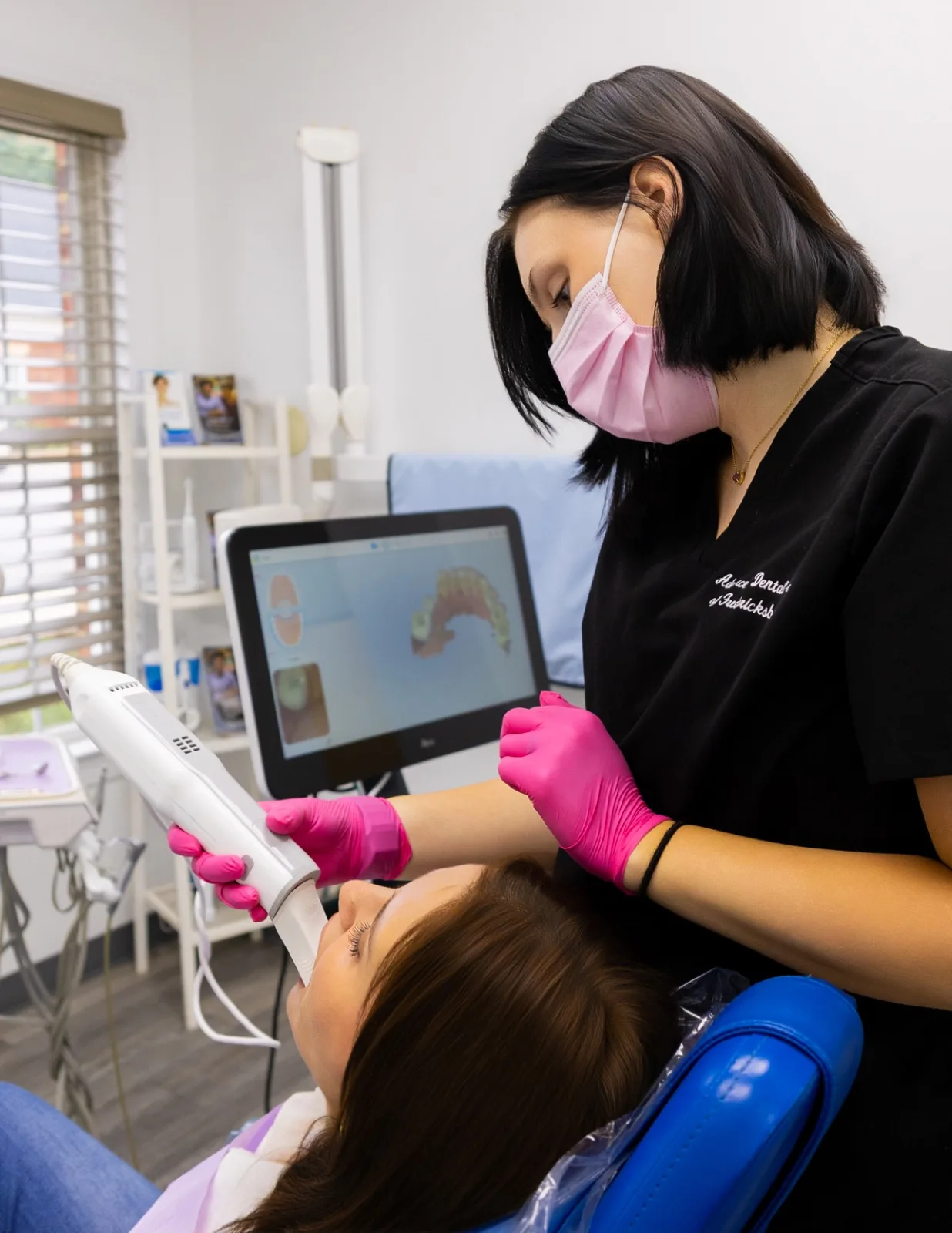
- Impressions & bite. We take a mold of your gums, because a denture holds on by matching their exact shape. We also record how your jaws close, so the teeth meet evenly and the denture does not rock.
- Wax try-in. The teeth first come set in soft wax, so you can see and feel them in your own mouth. Moving a tooth or changing its shade is simple at this stage and far harder once the denture is finished.
- Placement. An immediate denture goes in the day your teeth come out. A conventional one is placed after your gums have healed. Either way, we check the fit before you leave and ease any spot that presses.
- Follow-up adjustments. A new denture presses on gums that are not used to it, so sore spots and a slight lisp are common in the first weeks. Your tongue learns the new shape, and we see you again to relieve those spots and refine the fit.
Designed, Fitted, and Adjusted Right Here
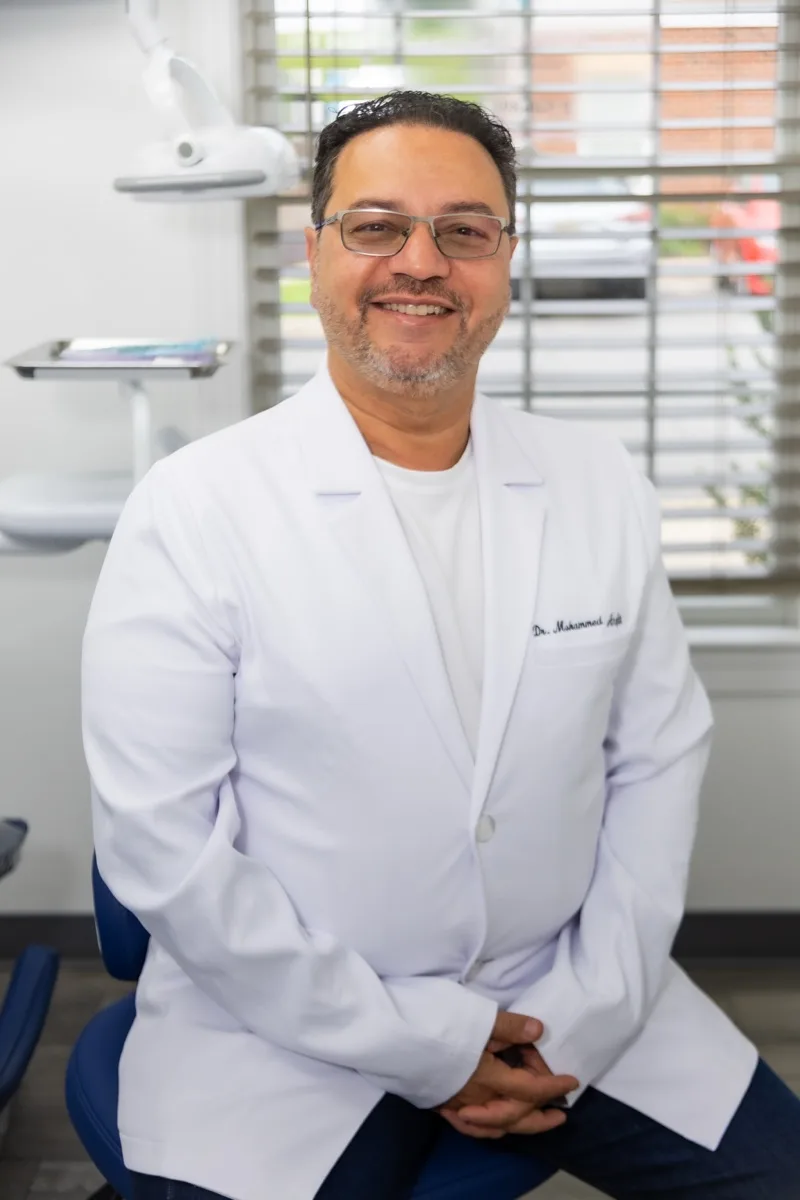
Dr. Waris, Dr. Arafa and the same team handle extractions, denture fitting and adjustments at our Spotsylvania Ave office. Nobody hands you off partway through. When your mouth changes and the denture needs work, you return to people who already know your history.
Some patients ask about a denture that never comes out. That usually means an implant-secured denture that’s fixed in place, a full arch of teeth anchored to a small number of implants. Fixed teeth do not slide when you eat or speak. They also involve surgery and more planning than a removable denture, so the first step is larger. The same team plans it.
- Fitted and adjusted here
- Implant-secured upgrade path
- Nitrous and oral sedation
Cost and Coverage for Dentures
Cost depends on whether the denture is complete or partial, conventional or immediate, and on the materials you choose. An immediate denture also needs a reline as the gums settle, which is worth planning for. We talk through price at your consultation.
We are in-network with many PPO plans, and we accept Medicaid. Plans differ in what they pay toward dentures, so call (540) 891-9911 and the team will tell you what your plan covers.
Ways to pay: CareCredit, Cherry, Sunbit, LendingPoint, and our in-house payment plans.
Ask about your coverageDenture Questions
The deciding question is whether you still have teeth to hold onto. If every tooth in the arch is gone, a complete denture stays in through a close fit against the gums. If some teeth remain, a partial uses them as anchors with clasps or attachments, and it can also keep them from drifting into the gaps.
Often, yes. That is an immediate denture, and you leave the office with teeth. The catch is that gums and bone reshape as they heal. The denture then loosens, so it often needs a reline or an adjustment once the tissue settles. Your doctor will tell you whether immediate or conventional suits your mouth.
It can. You see and judge the look yourself before anything is final. At the wax try-in, the teeth are set in wax. You can check their shape, size and shade in your own mouth and ask for changes.
There is no set lifespan, because the denture stays the same while your mouth keeps changing. Gums and the bone under them reshape, the fit slowly loosens, and a reline or a replacement is often needed at some point. At checkups we can see when the fit has shifted, often before sore spots appear. If lasting stability matters most, ask about implant-secured options.
Sometimes. If the denture itself is sound, a reline can refill the space left as your gums shrank. If sliding is the problem, implants in the jaw can hold the denture with attachments, and an existing denture can often be adapted. An exam and a 3D X-ray show which of these fits your mouth.
We accept Medicaid and are in-network with many PPO plans. What either one pays toward a denture depends on the plan, so call (540) 891-9911. The team will tell you what your plan covers, and payment plans or financing can help with any remainder.
Related care: All-on-4 & Full-Arch, Single & Multiple Implants.