Root Canal Treatment in Fredericksburg, VA
A root canal clears infection from inside a tooth so you can keep it, and we do them here in Fredericksburg.
or call (540) 891-9911
What a Root Canal Actually Does
Under the hard outer layers of every tooth sits the pulp, a soft center of nerves and blood vessels. It fed the tooth while it grew in. Deep decay, a crack, or a tooth that has been filled again and again can let bacteria reach it. The pulp is boxed in by rigid walls, so swelling has nowhere to go, and the tooth cannot clear the infection by itself.
In a root canal, we open the tooth, remove the infected pulp, clean the narrow channels inside the roots, then fill and seal them. With the source of the pressure gone, the tooth often stops hurting, and the root stays anchored in your jaw. Before we start, the tooth and the gum around it are numbed, which blocks the nerve signals that would otherwise tell you what is happening.
Signs You May Need a Root Canal
- Pain when you chew on one particular tooth, or when you tap it
- Hot or cold drinks that leave an ache behind long after they have passed
- One tooth turning gray or darker than the teeth beside it
- A swollen, tender gum or a pimple-like bump near a tooth
- A tooth with a crack, a chip, or a long history of repeated fillings
Some infected teeth give no warning. On an X-ray, a dark area at the tip of a root can show where infection is collecting, even while the tooth feels fine.
A cracked tooth, a deep cavity and an infected pulp can all ache when you bite, so symptoms alone cannot tell them apart. An exam and X-rays can, and the answer decides whether you need a root canal or a simpler repair. If one of these sounds like your tooth, call us.
What to Expect, from Start to Finish
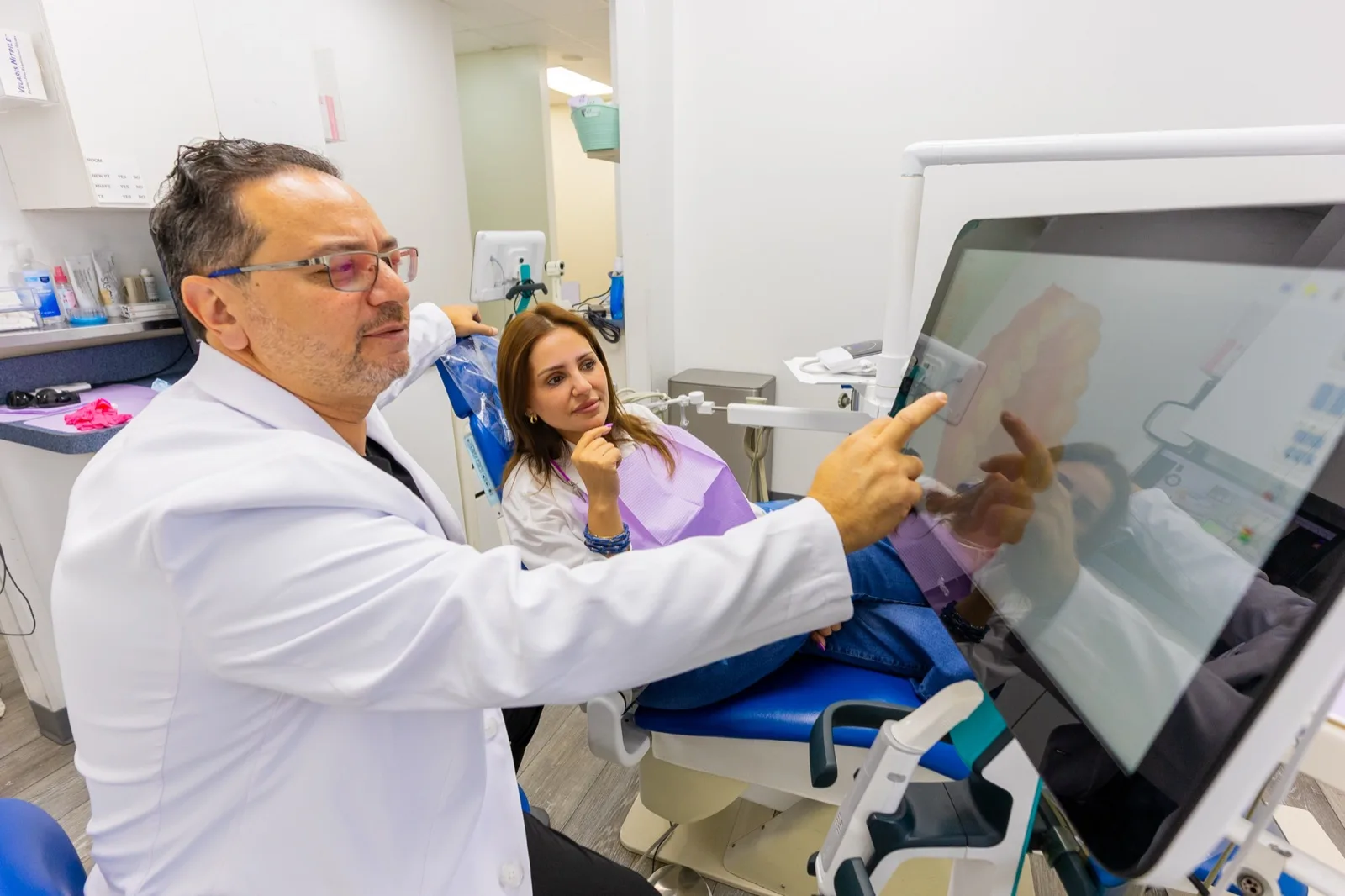
- Exam & X-ray. We examine the tooth and take X-rays to see whether infection has reached the pulp. If a flat X-ray cannot show the roots clearly, our 3D X-ray (CBCT) shows them from every angle.
- Getting you comfortable. Numbing medicine goes in first, so the tooth and the gum around it are numb. Nitrous oxide or oral sedation is available too, if you want help relaxing.
- Removing the infected pulp. We make a small opening in the top of the tooth and lift out the damaged pulp. Then we rinse the root channels with a disinfecting solution.
- Shaping & sealing. Once the channels are clean, we fill them with a rubber-like material and close them off, so bacteria have no path back in.
- A crown, most of the time. A tooth without its pulp loses the blood supply that came from inside, and it can turn brittle over time. A crown covers the whole tooth to protect it, and it is usually placed at a follow-up visit.
Root Canals Done in Our Fredericksburg Office
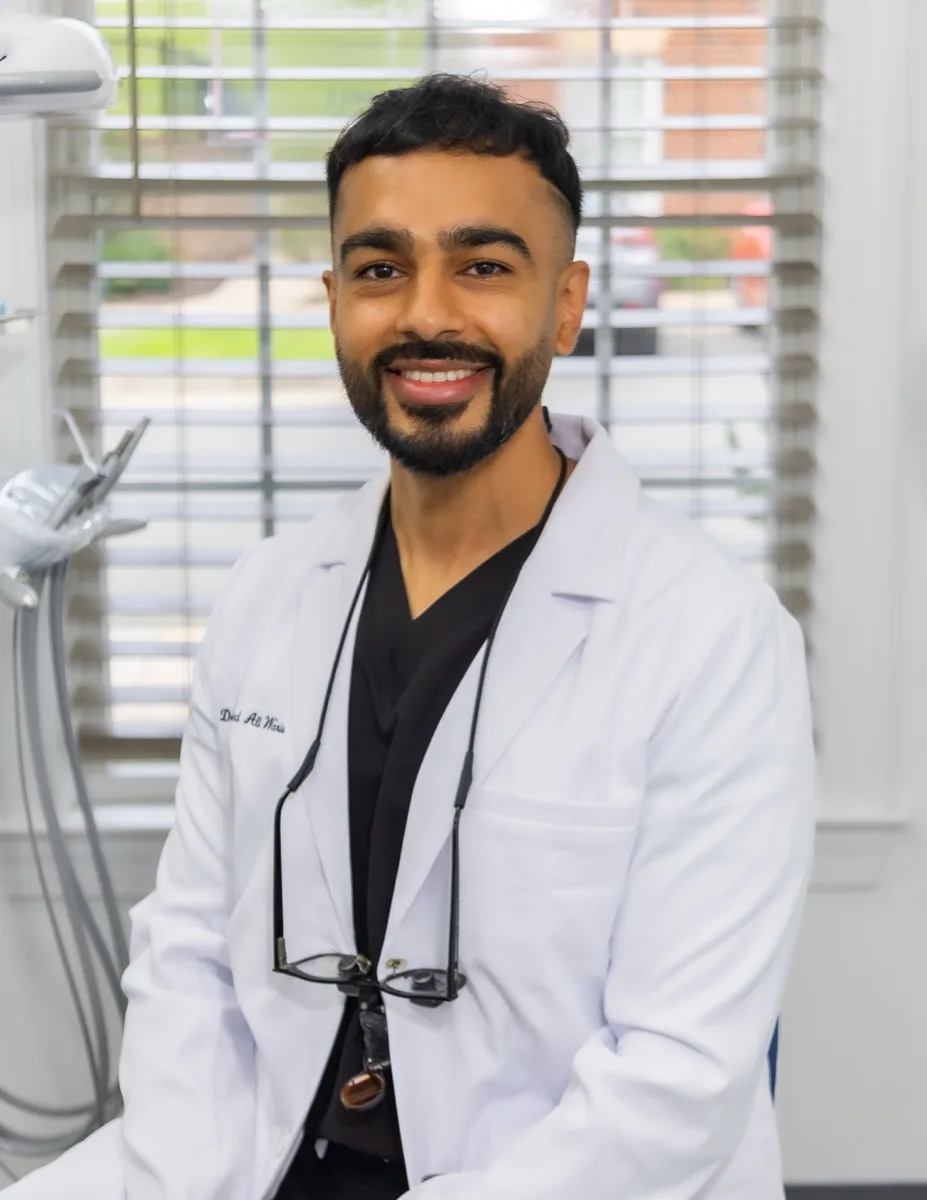
Root canals are part of the everyday dentistry we do in our own office on Spotsylvania Avenue, where Dr. Waris and Dr. Arafa practice. Your exam, X-rays, root canal and crown happen in one place, so your records are already in front of the team at each step.
A root canal is for a tooth whose pulp is already infected or too inflamed to recover. When the damage stops short of the pulp, a filling or a crown can do the job. The exam is where we sort out which one your tooth needs. If you are nervous about being in the chair, we offer nitrous oxide, oral sedation and an extra-gentle numbing technique.
- Sedation available
- Crown placed here
Cost and Coverage for a Root Canal
Three things move the cost of a root canal. Front teeth often have a single canal to clean, while molars have several, and each canal adds time. The other two are how far the infection has spread and whether a crown follows. Because those change from tooth to tooth, we do not publish prices. Pricing is discussed at your consult.
We are in-network with many PPO plans, and we accept Medicaid. Plans differ in what they pay toward a root canal, so call us at (540) 891-9911 with your plan details. For the part insurance leaves open, we offer in-house payment plans, plus CareCredit, Cherry, Sunbit and LendingPoint.
Ask about your coverageRoot Canal Questions, Answered Honestly
The pain most people connect with root canals comes from the infected tooth, where swollen pulp presses on the nerve inside rigid walls. The treatment takes that pressure away. We numb the tooth and the gum around it first, and nitrous oxide or oral sedation can be added if you want it. Some soreness afterward is common while the tissue around the root settles.
It depends on how far the damage has traveled. A filling replaces decayed tooth and works while the pulp is still healthy. Once bacteria are in the pulp, a filling only covers the problem, and the infection can keep spreading toward the bone. An exam and X-rays show how deep the damage runs, and a root canal is often how a tooth gets saved instead of pulled.
Often, yes, especially for back teeth that do the heavy chewing. After a root canal the tooth has lost the pulp and some of its structure, so it can crack under biting force. A crown wraps the whole tooth and spreads that force. It is usually placed at a separate visit after the root canal.
It depends on the tooth. A front tooth with one canal can often be finished in a single visit. A molar with several canals, or a tooth with a heavy infection, may need a second visit so the infection has time to clear. The crown is its own visit after that, and the exam and X-rays show which case yours looks like.
Many dental plans pay part of the cost of a root canal, though each plan sets its own limits. We are in-network with many PPO plans and we accept Medicaid, and what Medicaid pays depends on your coverage. Call (540) 891-9911 with your plan details. For the rest, we offer in-house payment plans, CareCredit, Cherry, Sunbit and LendingPoint.
Yes. We offer nitrous oxide (laughing gas), oral sedation, which is a pill taken before the visit, and an extra-gentle numbing technique. Our treatment rooms have TVs, blankets and pillows. Much of the dread comes from not knowing what will happen. Tell us when you book, and we can plan which comfort options fit you.
Related care: Crowns & Bridges, Emergency Dentistry, Nervous About the Dentist?.